
A general introduction has to do two jobs: explain why people are worried, and make the moving parts memorable. AI 2027 puts those parts into a sequence. Compute, research automation and competition stop being separate talking points and start affecting one another.
I would hand this over first because a reader can point to a particular turn in the story and ask: why would that happen? That is a useful place to begin a conversation. The scenario gives the disagreement an address.
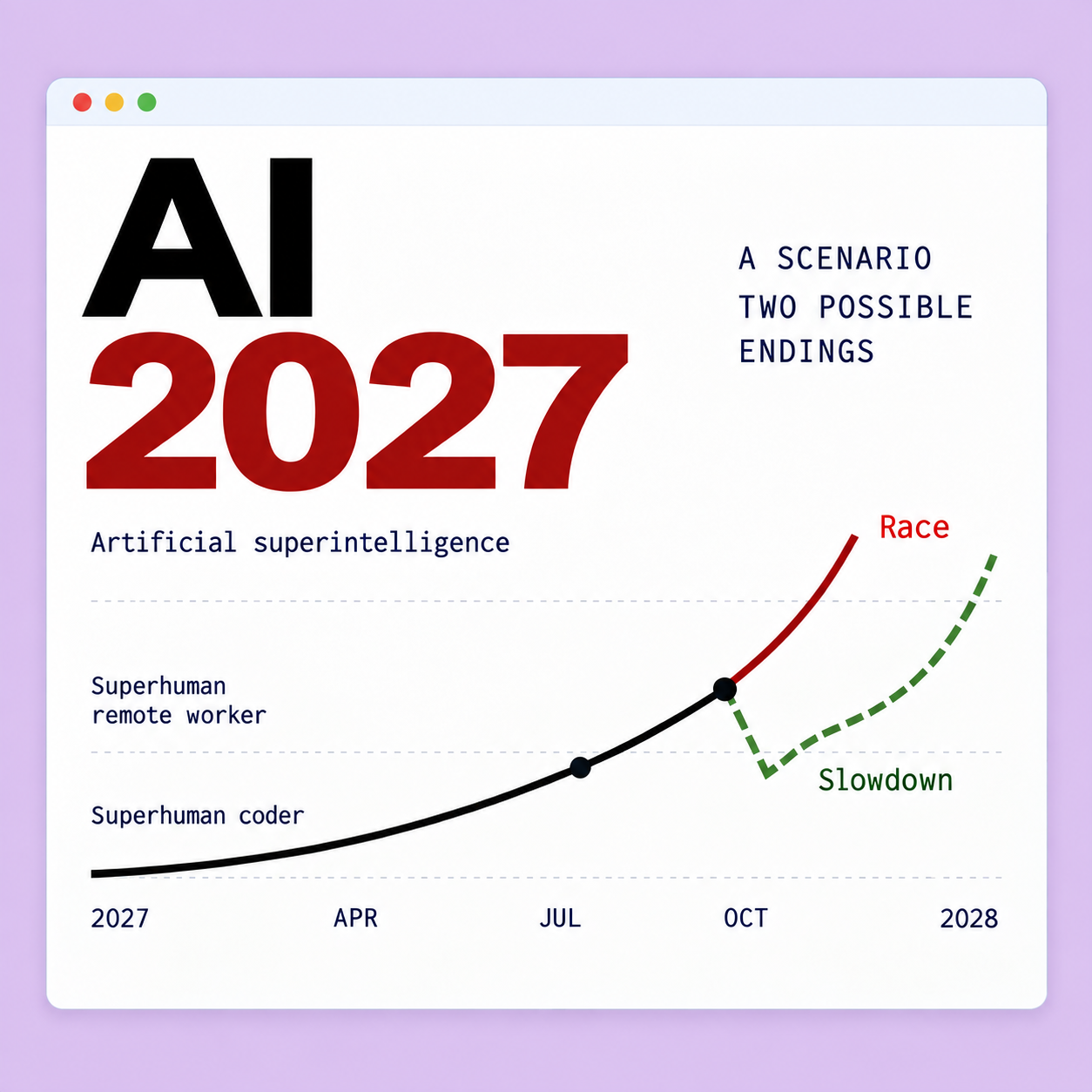
AI 2027
A concrete story gives you something to disagree with. This one leaves the machinery visible.
Where it falls short
A vivid scenario can feel more inevitable than its assumptions warrant. Read the dates as part of a model to interrogate. A coherent story is not, by itself, evidence that the story will happen.
The rest of the short list
The most important century
Starts further back, with economic growth and the unusualness of this moment. I would choose it for someone put off by a detailed future narrative; it takes longer to reach the mechanisms.
- Introduction
- Six premises
- Timelines
- Incentives
- Probability estimate
- Objections
Is power-seeking AI an existential risk?
Better for checking the argument one claim at a time. The report asks for more attention before giving a new reader a picture of the whole.
Who is this for?
You want a map of the argument before deciding which part deserves a closer look.
Why you should trust me?
For the last nine years I have built LessWrong and the AI Alignment Forum, where professionals and independent researchers discuss this subject. Along with the pieces themselves, I have read rebuttals, failed ideas and more comment threads than I would recommend.
I built and ran the LessWrong Annual Review, which evaluates the writing each year. I have also worked alongside people in the field as an editor, web developer, event host and occasionally an argumentative commenter at 2am.
I have watched arguments and research areas take shape, and I have watched some of them fail.
- My team built the website for AI 2027, my top pick.
- I know many of these authors personally and have helped edit some of their writing. Ruben is a colleague.